

The translation of court judgments issued by the Judiciary of Panama plays a crucial role in ensuring access to justice, transparency, and international legal cooperation. As Panama continues to position itself as a global hub for commerce, finance, and migration, the demand for accurate and reliable legal translations has grown significantly.
Legal and Institutional Context
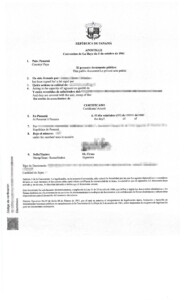
Panama’s legal system is primarily based on civil law traditions, and all official judicial documents are issued in Spanish. The Supreme Court of Justice of Panama and lower courts produce judgments that may need to be translated for use in international litigation, arbitration, immigration processes, or cross-border business transactions.
In addition to issuing judgments, the Judiciary of Panama has the authority to issue apostilles for its own judicial documents. This is particularly relevant under the Hague Apostille Convention, to which Panama is a party. An apostille certifies the authenticity of the document, allowing Panamanian court judgments to be recognized abroad without further legalization.
Translations are often required when Panamanian judgments are submitted as evidence in foreign jurisdictions or when non-Spanish-speaking parties are involved in legal proceedings within Panama.
Importance of Accuracy and Legal Equivalence
Legal translation is not merely linguistic conversion; it involves the precise transfer of legal meaning from one language to another. Court judgments contain specialized terminology, references to statutes, and procedural nuances that must be accurately reflected.
Errors in translation can lead to:
- Misinterpretation of judicial decisions
- Delays in legal proceedings
- Potential rejection of documents by foreign courts
For this reason, translators must have expertise in both legal systems and terminology, particularly when dealing with complex rulings issued by courts under the Judiciary of Panama.
Sworn Translations and Apostilles
In many cases, translated judgments must be certified or performed by a sworn translator recognized by Panamanian authorities. These translations carry legal validity and are often required for:
- Immigration applications
- International arbitration cases
- Enforcement of foreign judgments
When court judgments are intended for use abroad, they typically require both:
- A certified translation, and
- An apostille issued directly by the Judiciary of Panama
This combination ensures that the document is both linguistically accurate and internationally authenticated.
Challenges in Translating Panamanian Judgments
Several challenges arise in this field:
1. Legal Terminology Differences
Certain legal concepts in Panama may not have direct equivalents in common law jurisdictions, requiring careful interpretation.
2. Formal Language and Structure
Court judgments often use highly formal and archaic language, making them difficult to translate without specialized training.
3. Contextual Interpretation
Understanding the broader legal and procedural context is essential to avoid misrepresentation of the ruling.
Role in International Legal Cooperation
Translated and apostilled judgments facilitate cooperation between Panama and other countries in areas such as:
- Extradition
- Recognition and enforcement of judgments
- Commercial dispute resolution
Organizations and foreign courts rely on these documents to understand and apply Panamanian legal decisions accurately.
Best Practices for Legal Translation
To ensure quality and reliability, the following best practices are recommended:
- Engage professional legal translators with expertise in Panamanian law
- Use standardized legal terminology
- Include certification when required
- Ensure the judgment is properly apostilled by the competent authority
- Conduct thorough proofreading and review
Conclusion
The translation of court judgments issued by the Judiciary of Panama—combined with the ability of the judiciary to issue apostilles for its own documents—forms a critical part of Panama’s participation in the global legal system. High-quality translations and proper authentication uphold the integrity of judicial decisions, protect the rights of parties involved, and enable seamless international recognition.
Edgardo Espinosa, Esq.
Attorney-at-Law & Sworn Translator
The Century Tower, 4th floor, Suite 401
Panama City, Republic of Panama
📞 +507 6290-3468
✉️ [email protected]