

In an increasingly globalized world, the need to use official documents abroad has become more frequent. Whether for immigration, academic, commercial, or legal purposes, documents issued in Panama must be apostilled in order to be recognized internationally.
Panama is a member of the Hague Apostille Convention, which simplifies the legalization of documents through a single certification known as an apostille.
What is an Apostille?
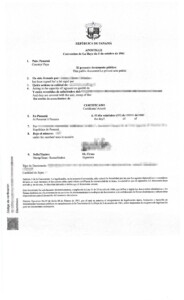
An apostille is an official certificate issued by a competent authority that validates:
- The authenticity of the signature
- The capacity in which the signer acted
- The seal or stamp on the document
In Panama, apostilles are issued by the Ministry of Foreign Affairs, the Ministry of Government, or the Supreme Court of Justice, allowing documents to be recognized in all countries that are members of the Hague Convention.
Documents That Can Be Apostilled
Common documents include:
- Birth, marriage, and death certificates
- Certificates of single status
- Diplomas and academic transcripts
- Powers of attorney
- Court judgments
- Public deeds
- Corporate documents
Each document must be properly issued, signed, and, when applicable, authenticated.
Apostille Process in Panama
1. Document Preparation
The document must:
- Be an original or notarized copy
- Contain the signature of a competent authority
- Include an official seal
Examples:
- Civil registry certificates issued by the Electoral Tribunal
- Academic documents signed by a school director or university registrar/general secretary
- Public deeds registered with the Public Registry of Panama
2. Notarial Authentication (if applicable)
Some documents must be notarized prior to apostille.
3. Apostille Issuance
The document is submitted to the Ministry of Foreign Affairs, which:
- Verifies the authenticity of the signature
- Issues the corresponding apostille
4. Certified Translation
If the document will be used in a country with a different language:
- A sworn (certified) translation is required
- The translation may also be apostilled
5. International Shipping
Once completed, the documents may be sent abroad through international courier services.
Common Uses
Apostilled documents are typically required for:
- Immigration procedures
- Marriage or divorce abroad
- International education or employment
- International business transactions
- Property verification
- Employment purposes
Why Trust Professionals?
Although the process may seem simple, errors in documentation can lead to delays or rejections.
Working with experts ensures:
- Proper document review
- Compliance with legal requirements
- Efficient and secure processing
About the Author – Edgardo Espinosa
Edgardo Espinosa is a legal professional and authorized public translator based in Panama City. He specializes in apostille services, certified translations, and the legalization of international documents.
He has extensive experience assisting both local and international clients, providing reliable, efficient, and personalized service.
Conclusion
The apostille process in Panama is essential to ensure the international validity of documents. With the support of qualified professionals, this process can be completed efficiently and without complications.
Trust the experts to handle your apostille needs with precision and professionalism.
Contact Information
Edgardo Espinosa
Attorney – Authorized Public Translator
Email: info@lawyerinpanama.com
Address: The Century Tower, 4th Floor, Office 401
Ricardo J. Alfaro Avenue
Panama City, Republic of Panama
Phone: +507 6290-3468