
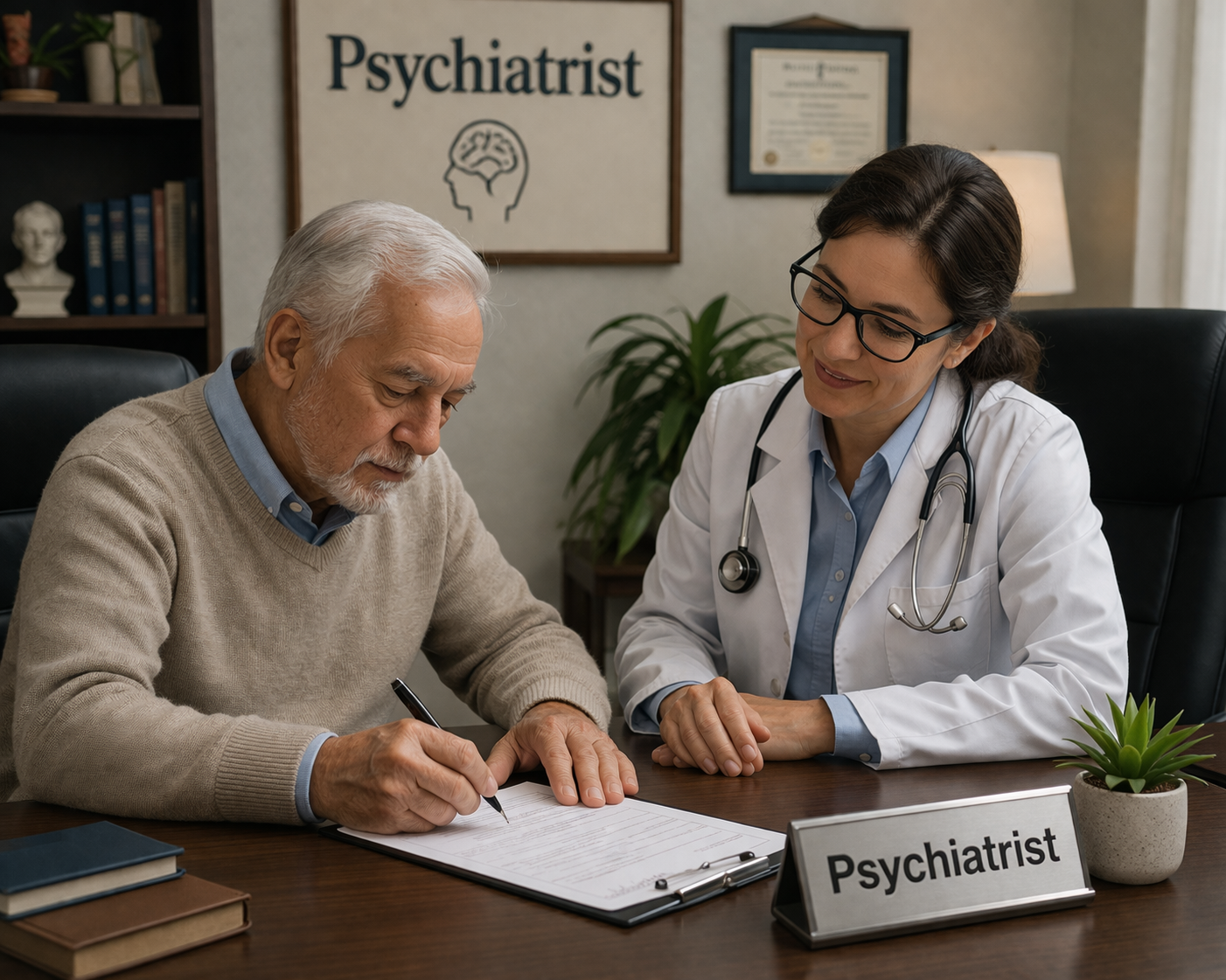
In Panama, executing a will before a notary public is a formal legal act that requires the testator to have legal and mental capacity at the time of expressing their wishes. A common question arises:
👉 Is it mandatory for elderly individuals to be evaluated by a psychiatrist?
⚖️ 1. General Rule: It is NOT mandatory
Under Panamanian law, there is no legal requirement for elderly individuals to undergo a psychiatric evaluation in order to execute a will before a notary public.
The key requirement is that the testator:
- Is of sound mind
- Understands the legal act being performed
- Freely expresses their will
👉 The notary public is responsible for verifying these elements during the execution of the will.
🧠 2. When is a psychiatric evaluation recommended?
Although not mandatory, in practice, a psychiatric evaluation may be advisable in certain situations:
- Advanced age
- Doubts regarding mental capacity
- Conditions such as dementia or Alzheimer’s
- Potential future disputes among heirs
💡 In these cases, a certificate of good mental health, stamped and signed by a psychiatrist, is recommended.
- Strengthens the validity of the will
- Helps prevent legal challenges
🖋️ 3. Procedure to Execute a Will in Panama
Step 1: Preparation
- Identify assets and beneficiaries
- Draft the will (preferably with legal counsel)
Step 2: Appearance before a Notary Public
The testator must:
- Present valid identification (passport or national ID)
- Express their intentions clearly
The notary will:
- Verify identity
- Assess basic mental capacity
- Certify the legal act
Step 3: Execution (Signing)
- Witnesses may be required depending on the type of will
- The document is signed before the notary
Step 4: Notarial Registration
- The will is incorporated into the notary’s official records (protocol)
🌍 4. What if the testator does not speak Spanish?
If the testator does not speak or understand Spanish, Panamanian practice requires the presence of two Panamanian sworn translators.
The translator will:
- Interpret the contents of the will
- Ensure full understanding by the testator
- Sign the document along with the parties involved
💡 This step is essential to guarantee the legal validity of the will.
⚠️ 5. Practical Recommendations
- ✔️ Obtain a medical certificate if there are concerns about capacity
- ✔️ Use a lawyer to ensure proper drafting
- ✔️ Engage a certified translator if needed
- ✔️ Ensure the testator’s will is expressed freely and without pressure
✅ Conclusion
In Panama, elderly individuals are not required to undergo a psychiatric evaluation to execute a will. However, in certain cases, obtaining a psychiatric opinion can be a prudent legal safeguard to strengthen the document and reduce the risk of future disputes.
The notary public plays a central role in validating the act, and when language barriers exist, the involvement of Panamanian certified translators is essential to ensure the testator’s intentions are clearly understood and legally protected.
Edgardo Espinosa, LL.B.
Sworn Translations The Century Tower, 4th floor, Suite 401, Panama City, Panama
 +507 6290-3468
 [email protected]