

Translating and Obtaining an Apostille for Background Checks for Panama
When applying for immigration, residency, or certain legal procedures in Panama, foreign applicants are often required to submit a criminal background check issued by their country of origin. To be valid in Panama, this document must usually go through two key steps: apostille and certified translation.
1. Background Check Issuance
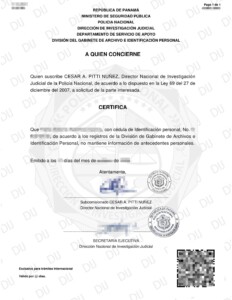
The background check must be issued by the competent authority in the country of origin (for example, a state police department, the FBI, or a national justice authority). The document must be original and current, as Panamanian authorities typically require recent issuance.
2. Apostille Certification
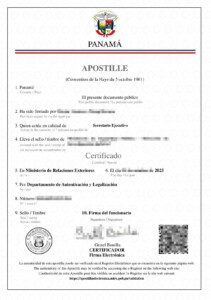
Panama is a signatory to the Hague Apostille Convention, which means foreign public documents must be apostilled in the country where they were issued.
The apostille:
-
Certifies the authenticity of the signature and seal
-
Confirms that the document is valid for international use
-
Eliminates the need for further consular legalization
The apostille must be issued before the document is sent to Panama.
3. Certified Translation into Spanish
If the background check is issued in a language other than Spanish, it must be translated into Spanish by a certified or official translator.
In Panama, immigration and government authorities require that:
-
The translation be accurate and complete
-
All seals, apostilles, and annotations be translated
4. Use in Panama
Once apostilled and translated, the background check can be submitted for:
-
Immigration and residency applications
-
Work permits
-
Professional licensing
-
Other administrative or judicial procedures
Using properly prepared documents helps avoid delays, rejections, or additional requirements.
Law Office of Edgardo Espinosa, Esq.
Immigration Lawyer
Tel./WhatsApp: +507 6772-4739
Email: [email protected]
Address: Century Tower Building, Sute 401, Ricardo Joaquin Alfaro Avenue,
Township of Bethania, Panama City, Republic of Panama.